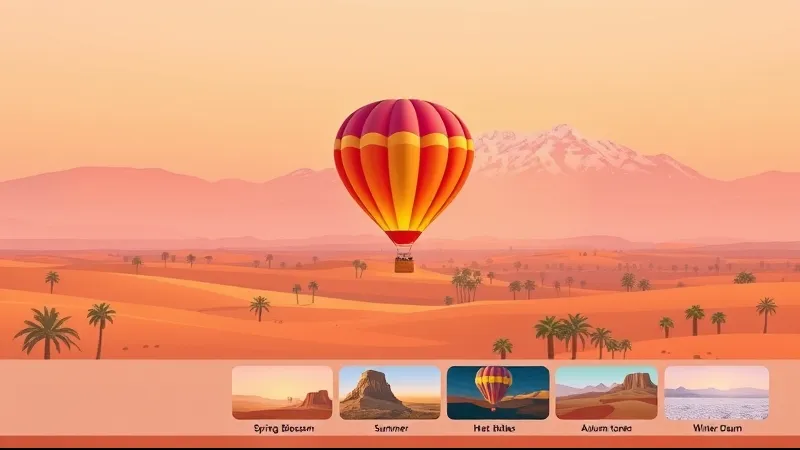
What is the best time of year for a hot air balloon ride in Marrakech?
Spring (March–May) and autumn (September–October) offer the most reliable dawn flying near Marrakech: mild temperatures, calmer mornings and settled air just after sunrise. Summer flies too, but the day heats rapidly once you land, while winter carries the highest cancellation rate from wind and low cloud. No single month is guaranteed, and no launch site is fixed.
The honest headline is that every balloon flight is weather-dependent. The pilot or operator assesses conditions at dawn and decides on the morning itself; if it is not safe, the flight is cancelled and the main operators offer a reschedule or a full refund. This guide is editorial — it flies no balloons and cannot predict any specific date. What it can do is explain how the seasons shift your odds, your comfort and your planning, so you book at a time and in a way that leaves room if a morning is scrubbed.
Balloons launch mainly from the plains north and north-east of the city — the Palmeraie area for some budget flights, the Haouz plain roughly 30–40 km out for classic flights — and the exact spot depends on operator, package and the wind of the day. Treat spring and autumn as the safer bets, then build flexibility into the trip rather than counting on one perfect sunrise.
How does Marrakech's climate affect dawn balloon flights month by month?
Marrakech has hot, dry summers and mild winters, and that annual swing sets the tone for every dawn flight. According to climate normals published through the World Meteorological Organization's World Weather Information Service and Morocco's Direction Générale de la Météorologie, July and August bring fierce daytime heat, while December and January stay mild in the middle of the day but genuinely cold at dawn — typically around 4–7°C.
Those daytime figures are not what you feel in the basket, though. Balloons launch in the coolest, calmest window just after sunrise, so the felt temperature aloft is lower than the headline high — a summer flight is airborne in soft early light long before the fierce midday heat, and a winter dawn can be genuinely cold before the sun climbs.
Roughly, the year breaks down like this:
- Spring (Mar–May): warming days, mild dawns, generally settled mornings — one of the two prime windows.
- Summer (Jun–Aug): hot and dry, very stable dawn air, but the afternoon heat and haze build fast.
- Autumn (Sep–Oct): heat eases, mornings stay calm — the other prime window.
- Winter (Nov–Feb): clear crisp air on good days, but cold dawns, shorter settled windows and more postponements.
These are climate norms, not forecasts. Read them as tendencies, not promises: any given week can behave differently, which is exactly why the pilot judges the real conditions at first light rather than the calendar.
Which months have the fewest balloon cancellations in Marrakech?
Spring and autumn tend to bring the fewest cancellations, because the main reason flights are scrubbed is wind — not rain. Hot air balloons fly only in light surface winds; operators cite roughly 15 km/h at ground level as the practical ceiling, and they also stand down for rain or poor visibility. Calm dawns are what you want, and they are most common in the shoulder seasons.
Winter is where the odds tilt against you. Cold fronts crossing Morocco raise surface wind, and occasional low cloud or dawn fog on the plains can hold a balloon on the ground even when the rest of the day looks fine. Summer mornings are usually stable and settled, so wind cancellations are less frequent — the summer trade-off is heat and afternoon haze rather than scrubbed launches.
A note on the numbers you may see elsewhere: some operators advertise "fewer than 5% of flights cancelled" or "flying around 350 days a year." Those are operator claims, not independently verified facts, and they describe an average year rather than your morning. This guide cannot predict a specific date. Conditions are assessed at dawn, the pilot decides, and a settled month still contains individual mornings that don't fly. If certainty matters to you, build it into the plan (see below), not into a month.
What is a dawn balloon flight near Marrakech actually like season by season?
A dawn balloon morning near Marrakech follows the same rhythm year-round, and the season mainly changes how it feels rather than what happens. Expect a hotel pickup between 4:00 and 5:30 am (it shifts with the season and sunrise), a transfer of roughly 30–45 minutes out to the launch area on the plains toward the Atlas foothills, then 40–60 minutes in the air when conditions allow, and a Berber-style breakfast after landing. Door to door it runs about 4–5 hours, putting you back in town late morning.
What shifts with the calendar is the light and the cold. In winter the basket can be crisp and sometimes near-freezing before sunrise, and the burner warms only those standing right under it — so the season is about layers and patience for the sun. In spring and autumn the dawn air is soft and mild, which is why these months are the easiest on comfort. Summer gives you warm early light and very still air, but you are trading that for the heat that arrives soon after you land.
One honest caveat in every season: nobody can promise the High Atlas view. Whether the distant peaks show depends on haze, route and the day's cloud, and the balloon goes where the wind takes it. Winter's clearer air improves your chances of seeing snow on the far mountains, but it is never guaranteed. Plan for the flight itself, and treat the panorama as a bonus rather than the reason you booked. If you want to compare how the tiers change the morning, see the standard vs VIP vs private comparison.
Is summer too hot for a balloon ride in Marrakech?
Summer is not too hot to fly, because the balloon is airborne at first light — before the worst of the day's heat arrives. Launch happens in the coolest, calmest air just after sunrise, so the flight itself is comfortable even in July or August. The catch is what comes next: the ground heats rapidly once you land, and the transfer back into town happens as temperatures climb toward the day's peak heat.
Summer mornings do have an advantage — they are typically more stable and settled, so wind cancellations are less common than in winter. The downside is greater afternoon haze, which can soften the distant views and is another reason the early slot matters. The earlier you are aloft, the clearer and cooler the air.
Practical, weather-dependent advice for a summer flight: take the earliest available start, bring sun protection (hat, sunglasses, sunscreen) for after landing, and stay hydrated across the long morning. Comfort in the air is rarely the summer problem; it's the hours on either side of the flight, once the sun is up, that ask for planning.
Is winter a good time for a hot air balloon ride in Marrakech?
Winter can be a fine time to fly, but it is a clear trade-off rather than an easy yes. On its good days winter delivers clean, crisp air and the chance of snow on the distant High Atlas — the visibility can be at its best of the year. Against that, dawn temperatures in December and January typically sit around 4–7°C, the settled flying windows are shorter, and the cancellation risk from wind and fog is the highest of any season.
The cold is manageable if you respect it. Dress in warm layers you can peel off as the sun rises, because the basket offers no heating beyond the burner directly overhead, and the pre-dawn wait on the ground is often the coldest part. The bigger planning issue is the cancellation odds: a winter cold front can scrub a morning at short notice.
So if you travel in winter, keep your dates flexible. Book the flight early in the trip so a scrubbed morning can be rescheduled within your stay, and accept that even a promising forecast can change by dawn. Winter rewards travellers who plan for the weather rather than expect it to cooperate.
How should the season change the way you plan and book?
The season should change your buffer, your alarm and your expectations — not whether you go. The single most useful move in any month is to book the flight for an early day of your trip, so a weather cancellation still leaves room to reschedule before you leave. This matters most in winter, but it is sound logic year-round, because even the calm shoulder seasons contain the odd morning that doesn't fly.
Expect an early alarm whatever the season, and remember that dawn timing shifts through the year: sunrise (and therefore pickup) is earlier in summer and later in winter, which is why pickup windows range from around 4:00 to 5:30 am. Pack for the season — warm layers in winter, sun protection in summer — and treat the transfer and breakfast as part of a 4–5 hour morning.
Finally, don't plan around the numbers in any article, including this one. Prices, ratings, review counts and current availability change constantly and live only in the booking widgets on the tour pages. For shared sunrise flights, budget from around €130, then check the live figures and inclusions on the classic sunrise flight page or weigh your options on the best balloon ride comparison. The GetYourGuide widgets there hold the current prices and ratings; this guide holds the reasoning.
What is the alternative if a balloon flight is cancelled: tandem paragliding at Aguergour?
If your balloon morning is scrubbed, tandem paragliding at Aguergour is the natural backup. Aguergour sits in the Atlas foothills roughly an hour's drive south-west of Marrakech, and a tandem flight there is a way to still get airborne when the plains aren't flying — either as a replacement or as a second experience later in the trip.
The important honesty is that paragliding is not a guarantee either. It has its own wind and season profile, different from ballooning, and it is likewise cancelled in unsuitable conditions. The two activities can fail on the same bad-weather day or on different ones, so treat Aguergour as a flexible alternative rather than a certainty — a good reason to keep a spare morning in the plan.
If you want to understand how the two experiences differ in feel, cost and conditions, compare them on the balloon vs paragliding page or read up on the Aguergour tandem paragliding option.
Frequently asked questions
What is the single best month for a Marrakech balloon ride?
There isn't one guaranteed month, but April–May and September–October are the safest bets for calm, mild dawns and the fewest wind cancellations. Any month still depends on the actual weather at dawn, which the pilot judges on the morning itself.
Do balloons fly in the rain or wind?
No. Balloons fly only in light surface winds — operators cite roughly 15 km/h at ground level as the limit — and they stand down for rain or poor visibility. Wind, not rain, is the most common reason a flight is cancelled, and winter raises the odds.
What happens if my flight is cancelled?
The pilot or operator decides at dawn, and if conditions aren't safe the flight is cancelled. The main operators then offer a reschedule or a full refund. Booking early in your trip gives you room to try again before you leave.
How cold is it in the balloon at dawn in winter?
December and January dawns in Marrakech are typically around 4–7°C, and the basket has no heating beyond the burner directly overhead. Wear warm layers you can remove as the sun rises; the coldest part is often the wait on the ground before launch.
Can I see the Atlas Mountains from the balloon?
Sometimes, but it is never guaranteed. Whether the High Atlas shows depends on haze, the day's cloud and the wind-driven route, and the balloon goes where the wind takes it. Winter's clearer air improves the chance of seeing snow on the far peaks, without promising it.
Is it better in the morning or evening?
Morning — flights near Marrakech run at dawn, in the most stable and coolest air of the day. There are no standard evening balloon flights here, because afternoon heat and wind make the conditions less reliable.
Ready to plan around the weather? Book a dawn flight for an early day of your trip and check live availability and current prices on the classic sunrise balloon flight page, or weigh every option on the best hot air balloon ride comparison.
Sources
- World Meteorological Organization — World Weather Information Service, Marrakech climate normals
- Direction Générale de la Météorologie (Maroc Météo) — official national weather service
- Office National Marocain du Tourisme — Visit Morocco
- UNESCO World Heritage Centre — Medina of Marrakech
- FAA Balloon Flying Handbook (FAA-H-8083-11) — how wind limits govern balloon flights