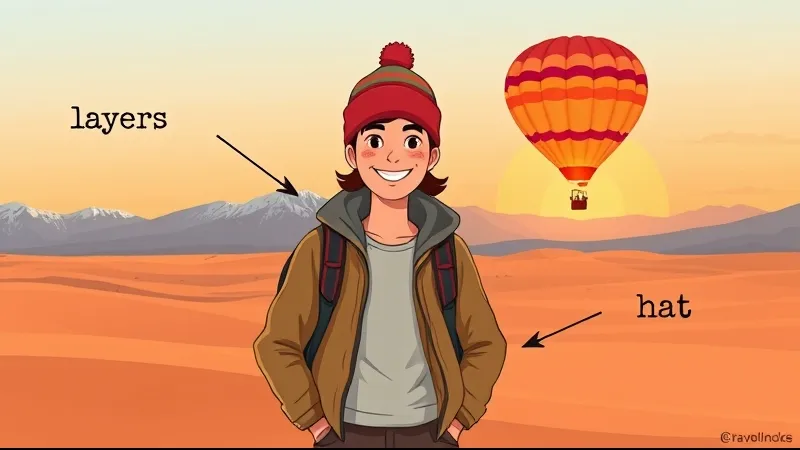
What should you wear for a hot air balloon flight in Marrakech?
Wear three layers, closed flat shoes, and pack light. Start with a moisture-wicking base layer, add an insulating mid layer such as a fleece or light down, and finish with a windproof, water-resistant outer shell. On your feet, wear closed, flat, sturdy walking shoes — trainers or light hiking shoes with grip. Bring a snug hat and a pair of gloves for the pre-dawn cold, plus sunglasses and sunscreen for the fast-warming morning after sunrise.
Hotel pickup is usually between 4:00 and 5:30 am, varying with the season and sunrise, followed by a 30–45 minute transfer to the launch area. The plain is coldest just before sunrise and warms quickly once the sun is up, so removable layers you can stow in a small bag matter far more than a single heavy coat.
One honest caveat before you plan an outfit: the flight is weather-dependent. Ballooning does not run in sustained wind, rain or poor visibility, and the pilot or operator decides on the morning itself whether to launch. If they cancel, the main operators offer a reschedule or a full refund. So keep your kit light and your valuables minimal — you may be dressed and ready only to be turned around at the field.
How cold is it at dawn near Marrakech before a balloon flight?
Dawn on the plains around Marrakech is cold in winter and cool for much of the year, always at its lowest point just before sunrise. In December and January, dawn in the Marrakech area is typically around 4–7°C, which is genuinely cold when you are standing still in an open basket. Spring and autumn mornings are milder but still cool enough to want a mid layer, and even summer dawns feel fresh before the sun climbs.
The reason is the desert diurnal swing: inland plains lose heat fast overnight under clear skies, so the temperature you feel at 5 am has little to do with the midday heat that Marrakech is famous for. A morning that starts near freezing-cold to the touch can be shirtsleeve-warm a couple of hours later. That is exactly why the layering system below works — you dress for the coldest ten minutes and peel down as the sun does its job.
For exact seasonal figures, check the official climate normals for Marrakech published by the Direction Générale de la Météorologie du Maroc, rather than relying on tour-brochure numbers. Dawn temperatures vary year to year and site to site across the Haouz plain, so treat any single figure as a guide, not a promise.
Why does the three-layer system matter for a sunrise flight?
The three-layer system matters because the basket is fully exposed and the temperature changes dramatically within the flight window. One thick coat traps you at a single warmth level; three thin layers let you fine-tune as conditions shift.
- Base layer: a moisture-wicking top (synthetic or merino, not cotton) pulls sweat off your skin so you do not get clammy and then chilled.
- Mid layer: a fleece or light down jacket does the actual insulating and is the layer you will most often add or remove.
- Outer shell: a windproof, water-resistant jacket blocks the breeze at the field and any damp on takeoff and landing.
Because temperatures climb quickly after sunrise, the key word is removable. You want layers you can unzip, take off and stuff into a small daypack without fuss. One more thing worth knowing: the burner overhead radiates real heat onto your head and upper body, but it does nothing for your legs. Warm trousers matter more than people expect, and gloved hands stay far more comfortable than bare ones on the basket edge.
Do you get colder at altitude in a hot air balloon?
Slightly, but less than you might fear. Balloons over the Marrakech plains typically drift a few hundred metres above the ground, occasionally climbing higher. Air cools with altitude at the standard atmosphere lapse rate, so a modest climb only takes a few degrees off the ground temperature.
The more important point is wind chill — or the lack of it. A balloon moves with the wind rather than through it, so once you are airborne there is very little added chill from your own motion; the air around you is essentially still. The real cold does not come from height at all. It comes from the early launch itself: you are outdoors at the coldest part of the day, on the ground, before and during inflation, which is when most people feel it most. Dress for that pre-dawn stand at the field and you will be comfortable in the air.
The standard atmosphere lapse rate is an internationally recognised reference; you can read more on the World Meteorological Organization resources on atmospheric structure.
What are the right shoes for a hot air balloon flight?
The right shoes are closed-toe, flat and sturdy: trainers or light hiking shoes with a grippy sole. This is the single clothing choice most worth getting right, because your feet do real work on a balloon morning.
You climb up and over the edge of a tall basket to get in and out, which needs a stable, flat foot and a shoe you can push off in. The takeoff and landing fields are open ground — uneven, often dusty, sometimes dewy and slippery in the early cool. Landings can be bumpy, and passengers are usually asked to bend their knees and brace, standing for the touchdown. None of that goes well in the wrong footwear.
So skip sandals, flip-flops and anything open-toed, avoid heels entirely, and leave stiff, brand-new boots at home — a blister-inducing debut is the last thing you want on a long morning that ends with a walk across a field. A worn-in trainer or trail shoe you already trust is ideal.
What should you avoid wearing on a balloon ride?
Avoid anything loose, delicate or likely to blow away. The advice is practical rather than alarmist, but a few items genuinely cause problems near an open basket and a burner:
- Open shoes — sandals, flip-flops and heels, for all the reasons above.
- Loose scarves and wide-brim hats — they catch the wind and disappear; wear a snug beanie instead.
- Delicate or expensive clothing — fields are dusty and dewy, and you may kneel or brace on landing.
- Dangling jewellery — long necklaces and bracelets are best left in the hotel safe near ropes and the basket edge.
Two small add-ons make the morning easier: a snug hat that stays put in a breeze, and a strap or retainer for glasses and sunglasses so they do not go over the side. That is really the whole list — dress simply and securely and you will not think about your clothes again once you are up.
What should you pack in a small bag for the morning?
Pack a compact kit and nothing precious. A small daypack that fits under your feet or on your back is all you need, and it doubles as somewhere to stow the layers you peel off after sunrise. A sensible morning kit:
- Water — the early start and dry air add up.
- Sunglasses and sunscreen — the sun is strong and direct once it clears the horizon.
- Phone or camera with a wrist strap — anything you hold over the basket should be tethered.
- A small snack — pickup often comes before breakfast, and the Berber-style breakfast is served only after landing.
- Any personal medication you might need.
Keep valuables to a minimum. Remember that the flight is weather-dependent and can be cancelled or rescheduled on the morning itself, with a refund from the main operators, so you do not want to be carrying anything you would hate to shuttle back and forth for a flight that may not go. If you want to weigh how different packages handle transfer, breakfast and basket size, the standard vs VIP vs private comparison lays out what actually changes between tiers.
How does clothing differ by season in Marrakech?
Clothing shifts with the season, but the layering principle never changes — you just add or subtract insulation. Think in seasons rather than specific dates:
- December–February: full winter kit. Base layer, a warm fleece or down mid layer, a windproof shell, gloves and a warm hat. This is the coldest window, with dawns in the Marrakech area typically around 4–7°C and the most weather postponements.
- March–May and October–November: operators point to spring and autumn as the most reliable windows. A mid layer plus a shell usually does it; keep gloves handy for the field but expect to shed layers soon after sunrise.
- June–September: dawns are mild, but a light jacket still earns its place before the sun is up, and sun protection becomes the priority. Summer dawn flights operate despite the extreme daytime heat precisely because dawn is the coolest, most stable air.
Across every season the flight runs at dawn, and every season is still subject to the morning weather call.
Does the same advice apply to Aguergour tandem paragliding?
Yes, with the shoes mattering even more. Tandem paragliding in the Aguergour zone, the site's alternative for thrill-seekers, launches from the higher Atlas foothills south-west of Marrakech, so it can be cooler and windier than a balloon morning down on the plain. The same three-layer system and the same closed-shoe rule apply.
The difference is the takeoff: paragliding starts with a short run down a slope, and the landing is on a hillside rather than a flat field. That makes a sturdy, grippy, closed shoe genuinely important — this is no place for sandals. Like the balloon, it is entirely weather-dependent and runs only when conditions allow. If you are still choosing between the two, the balloon vs paragliding comparison sets out how they differ in feel, effort and morning logistics.
Frequently asked questions
Will I be cold during the flight?
Most people feel the cold most before launch, standing on the ground at the coldest part of the day, rather than in the air. Once airborne the balloon drifts with the wind so there is little added chill, and the burner warms your head and upper body. Dress in layers and you will be comfortable.
Can I wear sandals?
No. You climb in and out over a tall basket edge onto uneven, dusty or dewy ground, and landings can be bumpy. Closed, flat, sturdy shoes with grip are the safe choice; leave sandals, flip-flops and heels behind.
Do I need gloves in summer?
Gloves are optional in summer, but a light pair does no harm — summer dawns are mild yet still fresh before sunrise, and your hands rest on a cool basket edge. In winter, gloves are strongly recommended.
What happens to my clothing plans if the weather cancels the flight?
Ballooning is weather-dependent, so a morning cancellation is always possible; the pilot or operator decides on the day. If they cancel, the main operators offer a reschedule or a full refund. Pack light and keep valuables minimal so a turnaround is painless.
Should I dress children the same way?
Yes, the same layering and closed-shoe rules apply to children, who feel the pre-dawn cold quickly. Note that age and other conditions are set by each operator, not by law, so check the specific product before booking a family flight.
Sources
- Direction Générale de la Météorologie du Maroc — official Moroccan meteorological and climate data.
- Morocco National Tourism Office — Visit Morocco — official destination and seasonal travel information.
- World Meteorological Organization — atmospheric structure and the standard atmosphere lapse rate.
- Direction Générale de l'Aviation Civile du Maroc (DGAC) — Morocco's civil aviation authority, under which commercial balloon operators fly with aeronautical authorisations and insurance.
Planning the rest of the morning? Compare what each package includes — transfer, basket size and breakfast — on the best hot air balloon ride in Marrakech guide, or read up on the classic sunrise balloon flight before you book.